

How do you hang a whiteboard level with hidden brackets?
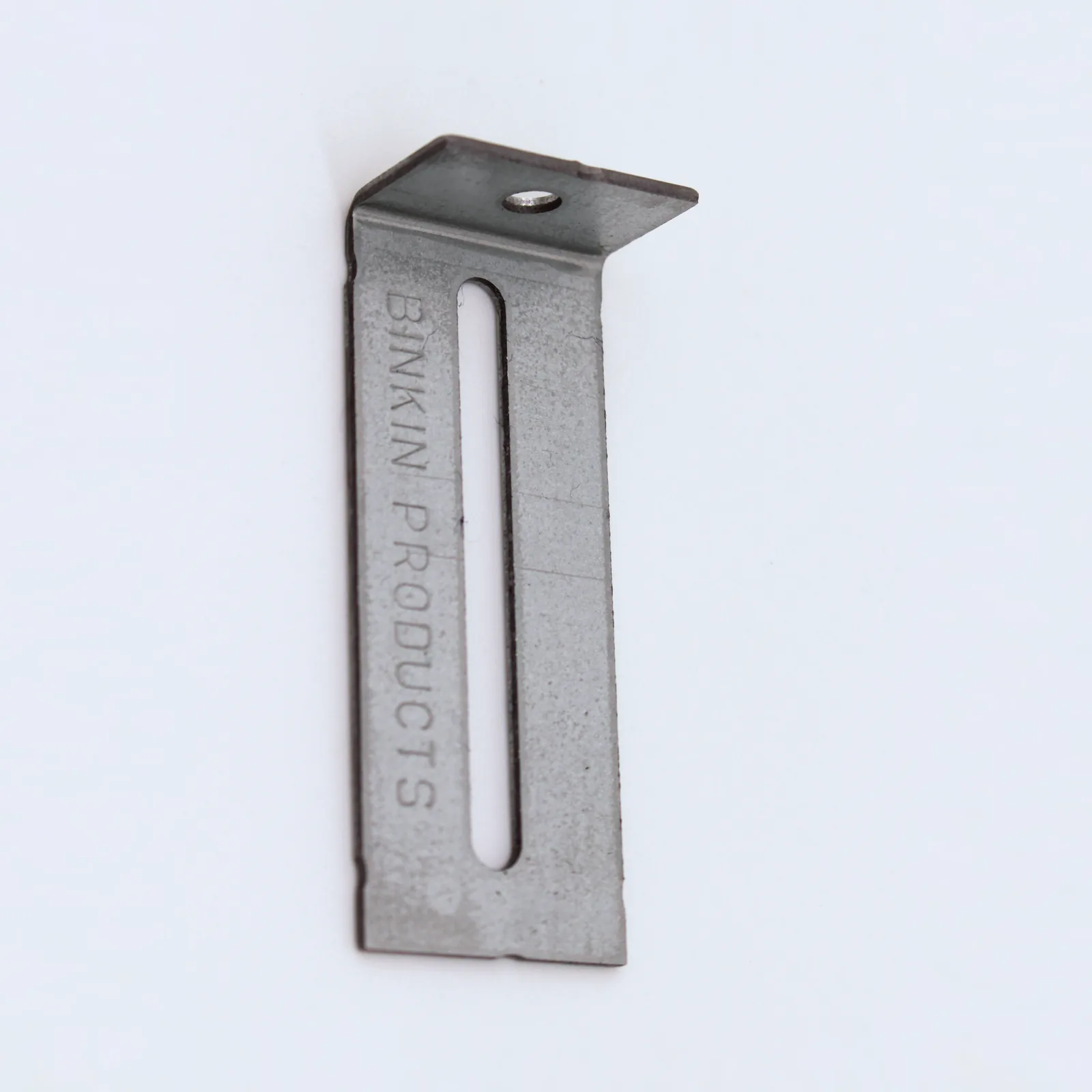
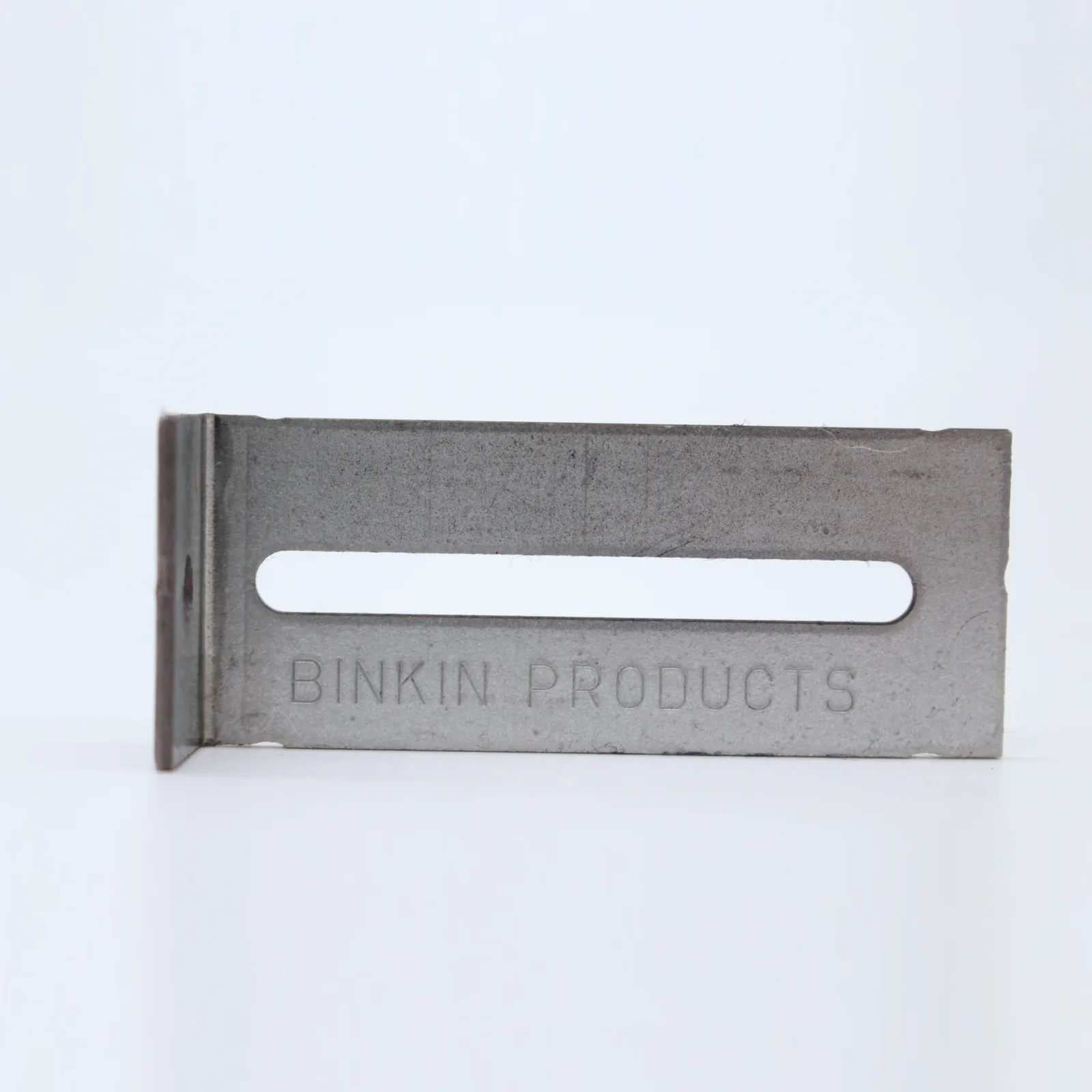
Screw slotted L-brackets to the wall with the slot running up and down, slide them to a level line and lock them. Fix a wood strip across the back of the board, set the board on the brackets’ short legs and screw up through their holes into the strip. The brackets end up behind the board, and the slots let you level it before you tighten. BINKIN’s bracket is made in the USA.
Why a slotted bracket
Out of sight
The brackets sit behind the board, so the wall shows a board, not hardware.
Level on old walls
Classroom block and plaster walls are rarely true. The slot takes up the difference.
Board, cork or display
The same strip-on-tabs method works for corkboards, display boards and framed canvases.
How a hidden board goes up
- Mark and anchorMark the height and screw two brackets to the wall through their slots, short legs out, snug but able to slide.
- LevelLay a level across the short legs and slide one bracket until it reads true. Tighten the slot screws.
- Fit a stripGlue and screw a straight wood strip across the back of the board where it will meet the short legs.
- Set and lockLower the board so the strip sits on the short legs, then screw up through each leg’s hole into the strip.
Where it gets used
- Classroom whiteboards
- Corkboards and bulletin boards
- Office marker boards
- Display and project boards
- Framed canvases and picture ledges
Use at least two brackets per board and more for a wider one, spaced along the strip, with fasteners suited to the wall: masonry anchors on block, studs or drywall anchors on drywall. For large or heavy boards, use the maker’s mounting hardware or load-rated fixings.
Which pack
Enough for up to four boards on two brackets each.
About 40¢ a bracket, for a summer of classroom changeovers.
Questions people ask
How many brackets does a whiteboard need?
At least two, and more for a wider board, spaced along the strip on the back. Use fasteners suited to your wall, and for large or heavy boards use the board maker’s hardware or load-rated fixings.
Can I do this on a concrete block wall?
Yes, with masonry anchors made for block. The slot still lets you level the brackets after the anchors are in.
Can the board be taken down later?
Yes. Back out the screws through the short legs and lift the board off; the brackets stay on the wall, ready for the next board at the same height.
Are BINKIN brackets made in the USA?
Yes. BINKIN brackets are made in the USA, from galvanized steel, by a father-and-son company from Illinois.