

They are mostly the same thing: a piece of metal bent to a right angle, with holes to screw through. Stores tend to say corner brace for an equal-legged bracket that strengthens the inside corner of a frame, box or piece of furniture, and L-bracket or angle bracket for one that mounts something to a wall, post or frame. What actually matters is the leg lengths, the thickness, the hole size, and whether it has a slot so you can adjust it after it is screwed down.
Side by side
| L-bracket / angle bracket | Corner brace | |
|---|---|---|
| Shape | Right angle; legs often unequal | Right angle; legs usually equal |
| Usual job | Mounting: shelves, signs, rails, panels to a wall, post or frame | Reinforcing a corner joint from the inside |
| Where it sits | Flat on the wall or post, the other leg under or behind the load | Inside the corner, one leg on each piece |
| Adjustable? | Slotted versions are | Usually not |
Other names you will see
- Flat corner plate or mending plate: lies flat across a joint instead of folding around it.
- T-bracket or T-plate: joins three pieces where one meets the middle of another.
- Shelf bracket: an L-bracket made for shelves, often with a long arm under the shelf.
- Structural angle or connector: heavy, load-rated hardware for building work. Use these for anything structural.
Where a slotted L-bracket fits in
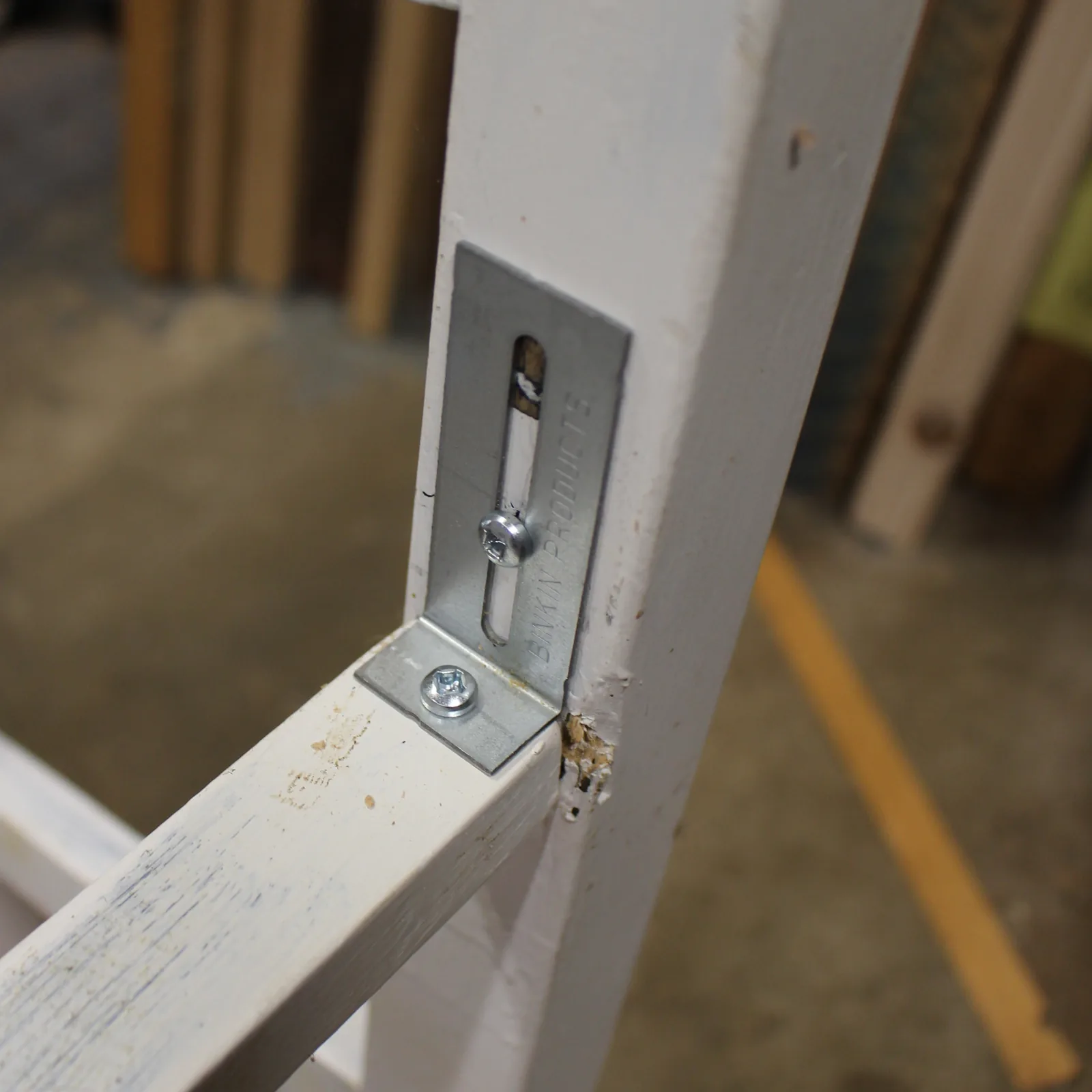
A slotted L-bracket is an L-bracket with a long slot in one leg, so you can slide it level or into line after the first screw is in. Tighten the screw and it holds like any fixed bracket. It can do a corner brace’s job too, with the added ability to pull a loose joint tight as you slide it.
Small brackets of every name are light-duty hardware. For decks, beams, stairs or anything people stand on, use load-rated structural connectors installed the way their maker specifies.
Questions people ask
Is an L-bracket the same as an angle bracket?
Usually, yes. Both names mean a metal bracket bent to a right angle. Some stores use angle bracket for heavier or structural versions.
What is the difference between an L-bracket and a corner brace?
A corner brace usually has equal legs and strengthens the inside corner of a frame or box. An L-bracket is more often used to mount something to a wall, post or frame, and its legs are often unequal.
Can an L-bracket be used as a corner brace?
Yes. Screw one leg to each piece. A slotted L-bracket can also pull the joint tight as you slide it before tightening.
Which should I buy?
For mounting and leveling, a slotted L-bracket like BINKIN’s, because you can adjust it after it is up. For a simple corner joint, any corner brace works. For structural loads, structural connectors.